
Call Us: Oregon and SW Washington: (503) 353-0100: Contact Us | Business Hours: 7:00 AM to 5:00 PM Mon-Fri

Answer Customer Questions About the Refrigerant Transition

Customers may arrive with a headline saying their refrigerant is banned or their equipment must be replaced. Start with the actual system and the proposed work. A useful explanation separates a regulatory transition from the condition of the equipment, repair options, and the requirements for a replacement.

Does the transition mean an existing system must be replaced?

Do not recommend replacement solely because a headline mentions a refrigerant deadline. Explain that rules for new equipment and activities differ from questions about service on an installed system. Evaluate the actual condition, documented repair options, and applicable requirements.

EPA’s HFC questions page discusses continued components for servicing existing R-410A systems. For a current installation decision, also check the Technology Transitions rulemaking page and later amendments rather than relying on an isolated answer or old chart.

A useful customer statement is: “We will identify the system, investigate the problem, and explain the supported options.” That keeps the decision connected to evidence.

Can a different refrigerant simply go into the old equipment?

Do not describe a refrigerant change as a routine refill choice. Equipment is designed for specified refrigerants and operating requirements. Carrier’s guidance specifically explains that R-454B is not a drop-in replacement for R-410A.

Explain the system decision in plain terms: a proposed replacement needs a documented combination of equipment, controls, and required components. Similar capacity or familiar connections do not establish interchangeability.

If a customer asks about retaining an existing indoor component, make that a specific application question for the manufacturer-supported selection process. Do not promise the answer before checking the full model information.

Does lower GWP mean a lower utility bill?

GWP describes a refrigerant’s relative climate effect if emitted, using a specified comparison basis. It is different from the energy performance of the installed system. EPA’s explanation of GWP describes that emissions comparison.

For operating cost, compare the proposed system’s performance for the building, climate, controls, energy rates, and use. Do not convert a refrigerant GWP reduction into the same percentage of energy or bill savings.

If using an estimate, label the assumptions and distinguish predicted from measured performance. A customer should be able to see which part of the proposal concerns refrigerant and which part concerns energy use.

Will repair refrigerant become unavailable or much more expensive?

Avoid a certain forecast based only on the transition. Obtain current supplier information for the actual material and timing. Distinguish today’s quote from a prediction of future market conditions.

If a repair option depends on availability, say what has been confirmed and what remains open. Present the repair and replacement scopes accurately so the customer can compare actual options.

Do not create urgency with an unsupported “last chance” claim. A truthful quote-validity period and a clear explanation of scheduling dependencies provide useful information without speculation.

Is the new equipment automatically eligible for an incentive?

No product feature or refrigerant name establishes every program’s eligibility. Check the current administrator requirements, exact equipment combination, site, contractor conditions, and relevant dates.

One important correction for current proposals: the IRS Section 25C guidance limits the credit to the eligible period ending in 2025. Do not carry the old federal-credit promise into a new 2026 installation proposal.

Keep the full price clear and describe any independently verified current rebate separately. Refer individual tax questions to the customer’s tax professional.

What information should the customer receive?

Provide the proposed equipment identity, work included, exclusions, confirmed compatibility basis, price and terms, and completion documents. Explain the handoff: operating information, warranty material, and the route for service questions.

In the job file, retain the technical selection and current regulatory review where relevant. If the equipment changes, update the explanation instead of allowing an old proposal to describe a different installed system.

For a Mar-Hy equipment inquiry, bring the existing and proposed full models, work scope, controls questions, quantities, and timing. Resolve those facts before turning a transition headline into a customer commitment.

PROSTOCK AT MAR-HY

PROSTOCK PROFESSIONAL QUALITY HVAC PARTS AND SUPPLIES
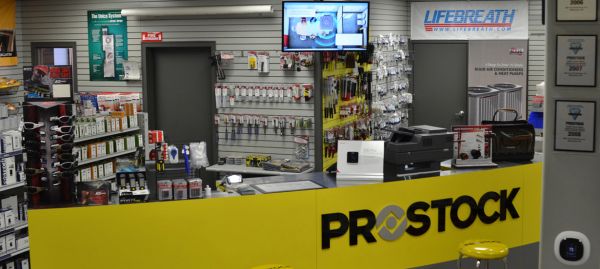
Mar-Hy Prostock HVAC parts and supplies store in Milwaukie

Support for the next service call.

Mar-Hy Distributors adopted the Prostock concept to enhance our support of local HVAC contractors. Since opening our Prostock store, we have received positive feedback from contractors on how they have improved response time to their customers. Our HVAC contractors have been able to stay ahead of the competition with access to our extensive inventory of Prostock Parts.

Quality parts. Contractor support.

Our Prostock replacement parts department is committed to improving the business of our HVAC contractors by providing quality services, competitive pricing, and products and supplies that earn customer trust and build lifetime customer satisfaction. We value our contractors and will continue to provide top of the line service for all of your HVAC needs.

Our team at Mar-Hy Distributors would like to thank you for your business.

Make Refrigerant Environmental Claims Specific and Checkable

Calling a refrigerant “eco-friendly” leaves the customer to guess what improved and what did not. A more useful explanation identifies the exact characteristic, comparison, and limits: for example, a lower GWP on the same assessment basis, rather than a promise about every environmental effect of the installed system.

Name the characteristic you can support

The FTC’s Green Guides summary cautions against broad, unqualified environmental-benefit claims. Use a precise, substantiated statement instead of implying a product has no environmental tradeoffs.

For refrigerants, that means distinguishing GWP, ozone-depletion information, handling requirements, and the energy performance of the equipment. Evidence for one characteristic does not automatically establish the others.

Keep the comparison explicit. “Lower” needs a named reference or clearly described alternative. If the values use different time horizons or scientific assessment bases, resolve that before presenting a percentage.

Separate the refrigerant factor from the amount emitted

EPA’s GWP explanation compares the warming effect of an emitted mass of gas with the same mass of carbon dioxide over a specified period. The gas’s GWP and the mass actually emitted are separate inputs.

Consider a hypothetical example using consistent GWP values. System A emits 0.2 kilograms of a gas with a GWP of 2,000, producing 400 kilograms of carbon-dioxide equivalent. System B emits one kilogram of a gas with a GWP of 450, producing 450 kilograms of carbon-dioxide equivalent.

B has the lower-GWP refrigerant, but the larger assumed release makes its direct-emissions result higher in this example. The numbers are invented to show the relationship; they are not measured leak rates or a comparison of actual equipment.

A system’s initial charge is not automatically an annual release. If a calculation uses leakage or end-of-life assumptions, state them separately rather than silently treating all refrigerant as emitted every year.

Do not turn a refrigerant claim into an energy-savings claim

A lower GWP does not mean the customer’s energy bill falls by the same percentage. Evaluate the actual equipment combination and application for energy performance.

For a comparison of estimated operating energy, identify building load, climate, equipment data, controls, energy rates, and use. Keep the same service requirement and analysis period. State what is estimated and which assumptions could change the result.

If discussing broader climate impact, identify which sources are included: direct refrigerant emissions, operating energy, manufacturing, transport, or other boundaries. A calculation covering one category should not be presented as a complete lifecycle result.

Preserve the equipment and safety context

Environmental characteristics do not authorize a refrigerant substitution. Use equipment designed for the specified refrigerant and the applicable manufacturer instructions. Carrier’s refrigerant guidance explains that R-454B is not a drop-in replacement for R-410A.

Keep qualified selection, installation, service, and recovery arrangements part of the actual job. The useful customer promise is the defined equipment and work scope, not a broad suggestion that a newer refrigerant removes every concern.

Use a claim record before publishing

Suggested review for a refrigerant-related marketing statement
Question Record
What exactly improved? The named characteristic and its meaning.
Compared with what? The stated reference, values, and consistent comparison basis.
Where is the evidence? The current primary source and applicable product identity.
What assumptions affect the result? Emitted mass, energy, time period, application, and analysis boundaries where relevant.
What might a customer infer? Whether the wording could imply unsupported safety, savings, or total-impact benefits.

Explain the selected system clearly

Use precise refrigerant information alongside the equipment’s actual application and performance data. A customer can understand a limited, clear statement more easily than an impressive adjective with no defined comparison.

For Mar-Hy product questions, bring the exact models and the claim you need to substantiate. Confirm the relevant documentation and current availability separately; an environmental statement does not establish either stock or application suitability.

PROSTOCK AT MAR-HY

PROSTOCK PROFESSIONAL QUALITY HVAC PARTS AND SUPPLIES

Mar-Hy Prostock HVAC parts and supplies store in Milwaukie

Support for the next service call.

Mar-Hy Distributors adopted the Prostock concept to enhance our support of local HVAC contractors. Since opening our Prostock store, we have received positive feedback from contractors on how they have improved response time to their customers. Our HVAC contractors have been able to stay ahead of the competition with access to our extensive inventory of Prostock Parts.

Quality parts. Contractor support.

Our Prostock replacement parts department is committed to improving the business of our HVAC contractors by providing quality services, competitive pricing, and products and supplies that earn customer trust and build lifetime customer satisfaction. We value our contractors and will continue to provide top of the line service for all of your HVAC needs.

Our team at Mar-Hy Distributors would like to thank you for your business.

Use HVAC Callbacks to Find a Correctable Pattern

A second visit can mean an unresolved complaint, a new failure, a planned follow-up, a missing part, or a customer operating question. Putting all of those events in one callback total can hide the problem the company actually needs to fix. Start by defining the event and reviewing the evidence.

Define a callback before calculating a rate

Choose a review window and a consistent rule for linking a return visit to the original job. Separate planned work from an unplanned return for the same issue. Keep new unrelated problems in their own category.

Record the reason for classification and allow a field lead to correct it after reviewing the job. An office booking description may be incomplete. The category should reflect what was established, not simply the first label selected on the phone.

A useful system also permits “not yet determined.” Forcing an uncertain return into a technician-error category can distort the data and discourage honest reporting.

Classify the cause in a way that suggests an action

Suggested return-visit categories
Category Evidence to review Possible improvement
Scope or survey gap Accepted scope, site observations, and unresolved conditions. Improve the survey or open-items process.
Selection or material issue Equipment identity, part information, application reference, and order history. Correct the selection or material handoff.
Work or verification gap Applicable procedure, recorded work, startup evidence, and later findings. Review the task, supervision, tools, or verification process.
Customer handoff Instructions provided, operating explanation, and the reported concern. Improve the equipment-specific explanation and documents.
New issue or planned work Timing, original scope, and findings from both visits. Keep the event distinct from a repeat of the original problem.

These categories are a proposed management framework. They are not technical diagnoses and should not replace a qualified assessment of the actual equipment.

Review the first and return records together

Collect the original complaint, equipment identity, observations, measurements with context, action taken, verification, and follow-up instructions. Compare them with the return visit’s findings. Identify what was known at the time and what became known later.

Ask whether the first technician had the correct documents, tools, material, time, and authority for the assignment. A missing record may indicate that a required check was not done, but it may also mean the documentation process failed. Establish the evidence before assigning a cause.

For installation work, use the applicable equipment requirements and quality process. ACCA’s quality standards provide installation and verification references. Keep corrective technical decisions with the qualified people responsible for the work.

Use rates with a clear denominator

Here is an illustrative example: a company completes 100 comparable service jobs during a review period. Ten return visits are booked, but three are planned follow-ups and two concern unrelated new issues. Five are classified, after review, as unplanned returns for the original problem. Under that definition, the rate is 5 ÷ 100 = 5%.

Reporting 10% would answer a different question: all return visits divided by completed jobs. Neither count should be mixed with a different definition in the next period. Keep the categories, review window, and sample size alongside the number.

Also decide how repeat visits are counted. A job with two unplanned returns may count once in a job-level rate while producing two visits in a workload measure. Both can be useful if their definitions stay separate.

Choose one corrective action with an owner

When a pattern appears, identify a change that can be checked. “Be more careful” is not enough. Examples include requiring a complete equipment-and-part inquiry, adding a missing survey field, updating an equipment-specific startup form, or scheduling observed practice on a defined task.

Name the owner, affected job types, start date, and evidence to review. Explain the change to the people who must use it. If the action adds work, make time and resources available rather than treating it as an invisible extra step.

Check whether the action was actually implemented before judging its effect. A new form that remains unused has not tested the proposed improvement.

Avoid rewarding a lower number at the expense of good reporting

Technicians should be able to ask for help, document uncertainty, and report a return accurately. If every callback is treated as a personal failure, staff may change labels or avoid escalating a problem. That makes the dashboard look better while the work remains unresolved.

Use case reviews to identify process and learning needs. Recognize correct escalation and a complete record. Handle individual performance through a fair process based on evidence, not a raw return count stripped of job context.

Check the result on comparable work

Review later jobs using the same definitions. Consider equipment mix, work type, season, dispatch changes, and sample size before claiming an improvement. A small change in a small sample may not support a broad conclusion.

Record what improved, what did not, and the next question. A useful review leaves the company with a better survey, selection process, task method, or handoff—not just a chart.

Make parts and equipment inquiries easier to resolve. Bring exact model information, the original part identity, and the specific application question to Mar-Hy so the next step starts with the right facts.

PROSTOCK AT MAR-HY

PROSTOCK PROFESSIONAL QUALITY HVAC PARTS AND SUPPLIES

Mar-Hy Prostock HVAC parts and supplies store in Milwaukie

Support for the next service call.

Mar-Hy Distributors adopted the Prostock concept to enhance our support of local HVAC contractors. Since opening our Prostock store, we have received positive feedback from contractors on how they have improved response time to their customers. Our HVAC contractors have been able to stay ahead of the competition with access to our extensive inventory of Prostock Parts.

Quality parts. Contractor support.

Our Prostock replacement parts department is committed to improving the business of our HVAC contractors by providing quality services, competitive pricing, and products and supplies that earn customer trust and build lifetime customer satisfaction. We value our contractors and will continue to provide top of the line service for all of your HVAC needs.

Our team at Mar-Hy Distributors would like to thank you for your business.

Turn an HVAC Job Debrief Into One Tested Improvement

A learning culture becomes concrete when people can examine a job, explain what made the work difficult, and improve the next assignment. Use a short debrief to identify one change worth testing. A meeting that ends with “communicate better” has not yet established what anyone will do differently.

Choose a job and a useful question

Review a completed or appropriately bounded piece of work while the relevant information is still available. The job does not need to be a disaster. A successful installation can reveal a preparation step worth repeating, just as a delayed visit can reveal a missing dependency.

Ask a focused question: Why did the material handoff work? What caused the second trip? Which information helped the new technician prepare? A broad review of every possible issue can become a long conversation without a practical result.

Invite the people who know the relevant parts of the process, including the field and office roles involved. A supervisor’s summary alone may omit the conditions that shaped the actual work.

Reconstruct the sequence before interpreting it

Compare the planned scope and sequence with what happened. Use the job record, accepted changes, material information, and relevant communications. Distinguish a fact recorded at the time from a later recollection or interpretation.

Ask what information was available when each decision was made. Hindsight can make a choice look obvious after the missing model number, customer preference, or access condition has finally been discovered.

Keep unresolved differences visible. If two records disagree, identify the question and source needed rather than choose the version that makes one department look better.

Look beyond the last visible error

Suppose an invented job needed an extra pickup because an accessory was missing. The final visible action is a technician leaving the site. The underlying issue could be the accepted scope, equipment selection, takeoff, order, receipt check, allocation, or loading.

“Technician should carry more parts” may be the wrong response if the required accessory was never identified. Follow the information and material through the actual handoffs to find the point where the need became unclear or the item was lost.

OSHA’s incident-investigation guidance emphasizes identifying underlying causes rather than simply assigning blame. Safety incidents and near misses require their own appropriate investigation and obligations; a routine learning debrief does not replace that process.

Separate a finding from a proposed solution

A finding says what the evidence supports. A solution is a proposed change whose usefulness may still need to be tested. Keep those statements separate so the group does not treat the first suggestion as a proven remedy.

For the missing-accessory example, the finding might be that the order list did not include the accessory identified in the final accepted scope. A proposed response could be a reviewed reconciliation between those two records before release.

The response still needs an owner, a workable method, and a check that it addresses the cause without creating unnecessary duplication. Adding another signature to a form is not automatically an effective control.

Write a small improvement trial

Suggested debrief-to-trial record
Element Question Useful outcome
Finding What happened and what evidence supports it? A shared description without an invented cause.
Proposed change Which work step will be different? A practical method with appropriate review.
Trial boundary Which jobs and period will test it? A defined scope the team can operate.
Owner Who prepares, applies, and reviews the change? Responsibility beyond a general team intention.
Review What evidence supports continuing or revising it? A decision based on later work.

Preserve what already works

Do not remove a necessary verification step merely because it takes time or appears twice. First understand whether the two checks serve different purposes, occur after different changes, or protect different people.

Likewise, do not standardize one employee’s shortcut until the qualified technical and safety reviewers establish that the method is suitable. A fast result on one job does not prove that the method applies to every equipment configuration.

A useful debrief can identify a practice to preserve, such as a clear pre-visit equipment photo or a well-prepared access arrangement. Explain why it helped so another person can reproduce the method rather than copy an unexplained habit.

Close the loop with the people who raised the issue

Tell participants what will be tried, what will remain unchanged for now, and why. If the suggestion cannot be used, explain the relevant constraint instead of letting it disappear after the meeting.

Review the trial on later comparable jobs. Show differences in scope, equipment, staff, and site conditions before attributing every result to the new method. A small trial provides learning, not a universal performance guarantee.

Retain the useful conclusion in the actual procedure, training example, or preparation record. A lesson stored only in meeting notes is easy to lose when the next assignment arrives.

For a material or equipment-information issue, bring Mar-Hy the exact example and question. A focused clarification can improve the next inquiry more effectively than a general request for better communication.

PROSTOCK AT MAR-HY

PROSTOCK PROFESSIONAL QUALITY HVAC PARTS AND SUPPLIES

Mar-Hy Prostock HVAC parts and supplies store in Milwaukie

Support for the next service call.

Mar-Hy Distributors adopted the Prostock concept to enhance our support of local HVAC contractors. Since opening our Prostock store, we have received positive feedback from contractors on how they have improved response time to their customers. Our HVAC contractors have been able to stay ahead of the competition with access to our extensive inventory of Prostock Parts.

Quality parts. Contractor support.

Our Prostock replacement parts department is committed to improving the business of our HVAC contractors by providing quality services, competitive pricing, and products and supplies that earn customer trust and build lifetime customer satisfaction. We value our contractors and will continue to provide top of the line service for all of your HVAC needs.

Our team at Mar-Hy Distributors would like to thank you for your business.

Make Your HVAC Business Easy to Verify in Local Search

A homeowner finding an HVAC company should be able to answer a few basic questions quickly: Does the company serve this address? Does it perform the needed work? How can the customer contact it? What evidence supports its claims? Local-search work begins with accurate business information and a useful website.

Audit the information customers actually see

Compare the company name, phone number, website, business hours, location or service-area information, and core services across the website and the business’s actual profiles. Record who controls each account and how updates are approved.

Use Google’s Business Profile guidelines for how the business should be represented. They call for accurate real-world identity and location or service-area information. Do not create a location claim simply to target another city.

A contractor operating from one location can explain the areas it genuinely serves without pretending to have a branch in each city. Confirm the profile rules for the actual business model, including whether customers are received at the address. Keep holiday and temporary-hour changes current.

Build service pages around the customer’s decision

A useful service page explains the work offered, the equipment or application scope, what happens during an inquiry, relevant limitations, and the next step. Avoid filling the page with the same city and service phrase in slightly different sentences.

For example, a heat-pump replacement page can explain the survey, equipment selection, existing distribution and controls review, proposal, and completion handoff. It should distinguish that service from a repair visit or a single-room addition rather than implying every inquiry follows the same path.

Use accurate examples and authorized photos from real work where available. Explain what the example shows and avoid presenting an illustrative image as a completed customer project. Google’s helpful-content guidance emphasizes substantive value and reliable, people-focused information.

Use a location page only when it adds useful information

Questions a useful local page should answer
Customer question Useful information Weak substitute
Do you serve my address? An accurate service area and a way to confirm an address. A list implying nonexistent offices.
Do you handle this job? Specific services and application limits. A broad “all HVAC needs” promise.
What happens next? Contact method, intake information, and a truthful description of the process. An unverified same-day or emergency-service claim.
Why trust the information? Accurate qualifications, real examples, and current business details. Invented awards, reviews, or project outcomes.

If several proposed city pages would contain almost identical information, review whether a clear service-area page would answer the question better. Do not delete or redirect existing pages without checking their purpose, traffic, links, and migration plan.

Test the contact path on a phone

Open the actual service page on a phone-sized screen. Check whether the company identity, service scope, and contact action are readable without fighting overlays. Test phone links, forms, error messages, and the confirmation shown after a valid submission using an authorized test process.

Ask only for information needed to route the inquiry. A customer may not know the equipment model during the first contact; provide a useful way to explain the problem rather than making an optional technical detail block the form.

Keep customer expectations accurate. If the form does not create a booked appointment, say what happens next. Confirm who receives the inquiry and how it is handled; a working form is not proof of a completed sales handoff.

Keep reviews and project evidence genuine

Ask for honest feedback through a consistent process and follow the review platform’s policies. Do not write customer reviews for them, invent experiences, or use a marketing tool to create a testimonial that never occurred.

When using a real project example, obtain the appropriate permission and remove unnecessary personal details. State the actual scope and verified result. A new equipment photograph does not establish a measured energy-saving percentage.

Give a named person responsibility for checking stale offers, expired events, broken links, and outdated technical claims. Business information can remain accurate while a promotional page quietly becomes misleading.

Measure inquiries and outcomes separately

Define the events you want to observe: a contact click, a submitted inquiry, a qualified service request, a booked visit, or an accepted job. They are different stages. Use the company’s approved analytics and customer-record processes to connect them where possible.

For an illustrative review, twenty form submissions do not mean twenty qualified opportunities. Classify duplicates, unrelated requests, service-area mismatches, and genuine inquiries before drawing a conclusion about the page.

Review a manageable set of pages and improve the clearest obstacle first. A ranking promise is not a substitute for verifying that customers can understand the service and reach the team.

Useful local content starts with useful job information. Equipment and training resources from Mar-Hy can support accurate contractor explanations; keep the company’s own service claims and customer examples grounded in its actual work.

PROSTOCK AT MAR-HY

PROSTOCK PROFESSIONAL QUALITY HVAC PARTS AND SUPPLIES

Mar-Hy Prostock HVAC parts and supplies store in Milwaukie

Support for the next service call.

Mar-Hy Distributors adopted the Prostock concept to enhance our support of local HVAC contractors. Since opening our Prostock store, we have received positive feedback from contractors on how they have improved response time to their customers. Our HVAC contractors have been able to stay ahead of the competition with access to our extensive inventory of Prostock Parts.

Quality parts. Contractor support.

Our Prostock replacement parts department is committed to improving the business of our HVAC contractors by providing quality services, competitive pricing, and products and supplies that earn customer trust and build lifetime customer satisfaction. We value our contractors and will continue to provide top of the line service for all of your HVAC needs.

Our team at Mar-Hy Distributors would like to thank you for your business.

Choose an Adjacent HVAC Market Before Building a New Service

Diversification starts with deciding which customer problem fits the business, not announcing a longer service list. Compare a few defined opportunities using demand evidence, capability, cost, support, and workload timing. A service that looks attractive in a national forecast may be a poor match for the company that would deliver it.

Separate a new customer from a new capability

Serving a different customer group with familiar work is different from adding a new technical service for current customers. Changing both at once can create more uncertainty than either change alone.

For example, moving from a defined residential service to a commercial maintenance scope may change decision makers, documentation, access, equipment, response arrangements, and commercial terms. Establish the actual differences rather than assume “HVAC” makes the work interchangeable.

Describe each opportunity as a specific customer, problem, and scope. Avoid comparing a narrow service with an entire market such as “data centers,” which can contain very different requirements.

Gather evidence of the problem

Use appropriate conversations, existing inquiries, and public market information to understand the work customers actually need. Ask about recent problems, how they currently obtain help, and what makes a solution difficult to use.

Distinguish interest from a commitment. Someone saying a service sounds useful does not establish a qualified opportunity, approved budget, or willingness to change providers.

The SBA’s planning resources include market research and competitive analysis. Use that process to test a local defined opportunity rather than borrow a global market-growth percentage as proof.

Compare the capability gap

Identify which knowledge, qualifications, tools, documentation, and support the company already has and which it must develop. Include selling, estimating, scheduling, verification, and later service, not only the installation task.

A familiar customer base can reduce some uncertainty while leaving a substantial technical gap. Conversely, strong technical capability may not solve a new customer’s procurement, access, or reporting requirements.

Consider an appropriate referral or subcontract arrangement only through the actual legal and business review. A partner’s capability does not automatically become the contractor’s own credential, warranty, or authority to promise a result.

Use a comparison without pretending it is objective truth

A scorecard can make assumptions visible. In an invented illustration, Opportunity A receives a demand score of nine and a capability score of three; B receives six and seven. The scores are subjective planning judgments, not measured market facts.

With equal weights, A averages six and B averages 6.5. If demand is given twice the weight of capability, A becomes seven and B about 6.3. The preferred option changes because the priorities changed, not because new evidence appeared.

Use that sensitivity to ask better questions. Is demand really established? Can the capability gap be closed responsibly? Are the weights expressing the company’s priorities or hiding a preference someone already had?

Suggested opportunity evidence map
Question Evidence Uncertainty to retain
Who needs it? Specific suitable inquiries and problem descriptions. Interest may not become paid work.
Can we deliver it? Actual capability and a reviewed development gap. One experienced person may not provide durable coverage.
Does it fit the economics? Defined costs, terms, and realistic volume assumptions. Launch and support effort may exceed the first estimate.
Does it diversify the load? Timing, staffing, and resource demand. Two services may compete for the same scarce crew at the same peak.

Examine cash and concentration

Different customers may use different approval and payment processes. Establish the actual terms and cash timing before treating the new market as equivalent to existing work.

Ask whether the opportunity reduces dependence on one customer or simply adds a different form of concentration. A large new account can increase sales while making the business more dependent on that account’s decisions.

Have the financial and business advisers review the model and commitments. This comparison is a planning method, not a recommendation to enter a particular market or accept a specific contract.

Choose the next question, then build readiness

Keep a list of the strongest assumptions behind each option. If one opportunity depends on a single prospective account, a specialist not yet available, or a product capability not yet verified, test that assumption before investing heavily in the rest of the plan.

Use evidence that could change the decision. Asking only people already enthusiastic about the service can reinforce an initial preference. Include appropriate reasons customers declined similar work and alternatives they currently use.

Compare the opportunity with improving an existing service. The same staff time and preparation budget might produce more value by correcting a recurring problem in work the company already understands. Diversification is one option, not an automatic requirement for every business.

Set a review point for the investigation itself. Continuing to research indefinitely also consumes resources. Decide what information is sufficient for the next responsible step and which unresolved risks prevent it.

The decision may be to investigate further, decline, or develop a bounded offering. Do not skip from an attractive score to a public service promise.

Once a direction is chosen, create the detailed launch-readiness plan: people, tools, approved scope, quality process, support, and a suitable pilot. That is a separate stage from deciding which opportunity deserves preparation.

Ask Mar-Hy about the actual equipment, documentation, and training gaps associated with the proposed work. A focused question supports a better decision than an unsupported assumption that every new HVAC market fits the current business.

PROSTOCK AT MAR-HY

PROSTOCK PROFESSIONAL QUALITY HVAC PARTS AND SUPPLIES

Mar-Hy Prostock HVAC parts and supplies store in Milwaukie

Support for the next service call.

Mar-Hy Distributors adopted the Prostock concept to enhance our support of local HVAC contractors. Since opening our Prostock store, we have received positive feedback from contractors on how they have improved response time to their customers. Our HVAC contractors have been able to stay ahead of the competition with access to our extensive inventory of Prostock Parts.

Quality parts. Contractor support.

Our Prostock replacement parts department is committed to improving the business of our HVAC contractors by providing quality services, competitive pricing, and products and supplies that earn customer trust and build lifetime customer satisfaction. We value our contractors and will continue to provide top of the line service for all of your HVAC needs.

Our team at Mar-Hy Distributors would like to thank you for your business.

Measure What AR Training Teaches Beyond Following the Prompts

A learner can complete an augmented-reality exercise by following arrows and still struggle to explain the task when the prompts disappear. Assess supported performance, understanding, transfer, and later retention separately. That makes an AR trial a learning evaluation rather than a demonstration that the software can guide a sequence.

Define the learning objective independently of the device

Choose a task and the evidence of understanding before choosing the presentation method. A suitable controlled objective might require identifying a component on a reviewed training assembly, connecting it to the applicable diagram, and explaining the evidence for the match.

Keep the exercise within appropriate safe conditions and required qualifications. An overlay on real equipment does not make the physical task risk-free. The public scope of ISO/IEC 5927:2024 concerns safe AR and VR setup and use; it does not approve a particular HVAC lesson or authorize hazardous work.

OSHA’s education guidance emphasizes the knowledge and skills needed for assigned work. Use qualified instructors and suitable practical assessment; a successful AR activity is not itself a license, credential, or unrestricted task authorization.

Separate four outcomes

Suggested AR learning-evaluation outcomes
Outcome What to assess What it establishes
Prompted performance The task with the intended visual support. What the learner can do with that assistance.
Explanation Reasoning, applicable references, and recognized limits. Whether the learner can explain the decisions.
Transfer A suitable different case using the normal approved reference method. Whether understanding extends beyond the practiced display.
Later performance An appropriate follow-up after a defined interval. What remains available after the immediate practice period.

These are suggested evaluation categories, not a qualification standard. The actual task, assessment method, and acceptance criteria need the appropriate instructor and technical review.

Use a new case without creating a trick test

In an invented lesson, the learner first follows a reviewed overlay to identify parts on a training assembly. For transfer, the instructor uses a suitable different arrangement within the taught scope and asks the learner to use the approved diagram and physical labels.

The task should test the intended concept, not an untaught equipment variation. If a new case requires knowledge the course never covered, poor performance does not isolate a failure of AR learning.

Ask the learner to explain uncertainty and when help is needed. Correctly recognizing that essential information is missing can be a better result than confidently guessing the component the instructor expected.

Keep ordinary approved references available where the real task permits them. Independent competence does not always mean performing from memory without any documentation; the assessment should reflect the actual work.

Compare teaching methods fairly

If comparing AR with a diagram, demonstration, or another format, use the same learning objective, relevant content, instructor support, practice opportunity, and assessment as far as practical. Otherwise, the result may reflect different teaching rather than the display method.

Record participants’ relevant starting experience. A group of experienced technicians and a group of new entrants should not be treated as equivalent merely because both complete the same exercise. A small internal trial can identify useful issues without establishing a universal training effect.

Also separate interface difficulty from subject difficulty. A learner may understand the HVAC concept but struggle with the headset controls; another may navigate the app easily while misunderstanding the equipment. The corrective support differs.

Use observations that explain the result

Retain relevant errors, requests for help, reasoning, reference use, and the instructor’s interventions. Completion time alone can reward a fast guess or hide substantial coaching. A correct result after repeated prompts differs from a supported independent explanation.

Review the digital content and its relationship to the training assembly. NIST’s industrial AR research identifies information and representation challenges. An incorrect or outdated overlay can create a teaching defect rather than reveal a learner’s weakness.

Do not count an entertaining experience or positive satisfaction response as proof of field performance. Learner and instructor feedback is useful, but it answers a different question from demonstrated understanding.

Decide what to keep, change, or teach another way

Use the trial to identify which concept benefited from visual support and which physical or diagnostic skill still needs other practice. A limited useful application can justify retaining AR for that lesson without replacing the whole training program.

Plan appropriate later application and qualified review. For equipment-specific learning, compare the objective with the current Mar-Hy training schedule. The result should be a skill the team can explain and demonstrate within its proper limits, with the technology supporting the learning.

PROSTOCK AT MAR-HY

PROSTOCK PROFESSIONAL QUALITY HVAC PARTS AND SUPPLIES

Mar-Hy Prostock HVAC parts and supplies store in Milwaukie

Support for the next service call.

Mar-Hy Distributors adopted the Prostock concept to enhance our support of local HVAC contractors. Since opening our Prostock store, we have received positive feedback from contractors on how they have improved response time to their customers. Our HVAC contractors have been able to stay ahead of the competition with access to our extensive inventory of Prostock Parts.

Quality parts. Contractor support.

Our Prostock replacement parts department is committed to improving the business of our HVAC contractors by providing quality services, competitive pricing, and products and supplies that earn customer trust and build lifetime customer satisfaction. We value our contractors and will continue to provide top of the line service for all of your HVAC needs.

Our team at Mar-Hy Distributors would like to thank you for your business.

Explain the Refrigerant Transition Without Promising a Universal Deadline

A customer who has heard that “R-410A is banned” may be worried that an operating system must be replaced immediately. Before answering, separate the equipment, the proposed work, and the rule involved. Manufacturing restrictions, installation restrictions, refrigerant service requirements, and a local permit decision are different questions.

Start with the customer’s actual equipment

Identify whether the conversation concerns an existing system needing service, replacement components, or a complete new installation. Record the system type and refrigerant from reliable equipment information. Do not apply a residential split-system answer to every chiller, VRF system, or refrigeration application.

A helpful opening question is: “Are we deciding how to repair this system, or selecting a replacement system?” That establishes the decision before discussing a deadline. The answer can change the documentation, equipment options, and responsible reviewers needed.

The contractor should then verify the current rule for the applicable sector and work. A supplier conversation can help identify products and documents, but it does not replace the contractor’s regulatory and installation review.

Use the current rule, including its amendments

EPA’s Technology Transitions rulemaking page lists final actions and earlier proposals separately. This matters because an older article or brochure may describe a deadline subsequently changed.

For example, EPA’s May 2026 final-rule fact sheet describes removal of the January 1, 2026 installation deadline for specified higher-GWP residential and light commercial air-conditioning and heat-pump equipment manufactured or imported before January 1, 2025. That is a defined amendment, not a blanket exemption for every equipment type or activity.

When answering a current project question, retain the rule reference, applicable equipment category, relevant dates, and the basis for the conclusion. If the equipment or facts change, revisit the conclusion instead of reusing a convenient sentence from an earlier quote.

Separate the four common questions

A suggested customer-conversation guide
Question What to establish What to avoid
Can an existing system be serviced? The actual repair, approved components, and applicable service rules. Treating a new-equipment restriction as an automatic replacement order.
Can this equipment be installed? Subsector, equipment identity, relevant dates, and current requirements. Assuming every product shares one deadline.
Can another refrigerant be used? The system’s approved refrigerant and manufacturer instructions. Describing a new refrigerant as a universal refill.
What should the customer choose? Condition, repair scope, replacement application, cost, and customer priorities. Using an inaccurate legal claim to force a sale.

Do not confuse lower GWP with compatibility

Global warming potential is one characteristic of a refrigerant. It does not establish that the refrigerant can be placed in equipment designed for another substance. Equipment design, refrigerant safety classification, required controls, and manufacturer instructions still matter.

EPA’s HFC questions and answers explains that R-32 and R-454B are not substitutes to put into systems that were not designed for them. Use current final-rule materials for deadlines and the applicable manufacturer documents for equipment-specific work.

Likewise, professional certification, local licensing, manufacturer training, and employer authorization are separate matters. A product presentation does not by itself qualify someone for every task associated with a new system.

Finish with an accurate written explanation

Consider an invented service call in which the owner believes the refrigerant transition makes a failed fan motor unrepairable. The contractor should first identify the fault and evaluate the proposed repair for that system. A rule about installing a new system does not by itself answer whether that motor can be replaced. If the investigation instead leads to a replacement proposal, the team then reviews the new system under the rules and instructions applicable to that installation.

Keeping those decisions separate gives the owner an understandable reason for the recommendation. It also prevents an irrelevant regulatory statement from hiding the actual equipment condition.

A useful proposal identifies the equipment and work being offered, the assumptions that require confirmation, and any unresolved application or permit question. If the customer’s existing system can be evaluated for repair, explain that option on its actual merits.

Before promising a model, date, or substitute, bring Mar-Hy the exact system and job information. Confirm current product documentation and availability, then have the appropriate qualified person resolve the regulatory and installation questions for the job.

PROSTOCK AT MAR-HY

PROSTOCK PROFESSIONAL QUALITY HVAC PARTS AND SUPPLIES

Mar-Hy Prostock HVAC parts and supplies store in Milwaukie

Support for the next service call.

Mar-Hy Distributors adopted the Prostock concept to enhance our support of local HVAC contractors. Since opening our Prostock store, we have received positive feedback from contractors on how they have improved response time to their customers. Our HVAC contractors have been able to stay ahead of the competition with access to our extensive inventory of Prostock Parts.

Quality parts. Contractor support.

Our Prostock replacement parts department is committed to improving the business of our HVAC contractors by providing quality services, competitive pricing, and products and supplies that earn customer trust and build lifetime customer satisfaction. We value our contractors and will continue to provide top of the line service for all of your HVAC needs.

Our team at Mar-Hy Distributors would like to thank you for your business.

Separate Commercial HVAC Energy Savings from Utility Demand Charges

A commercial electricity bill can fall or rise for reasons that a monthly kWh total does not reveal. Energy charges concern the amount consumed; demand charges can depend on a measured or calculated peak under the tariff. Read the actual billing definitions before promising that an HVAC energy reduction will produce the same percentage bill reduction.

Identify the tariff and billing boundary

Obtain the customer’s applicable current rate schedule, bill, meter information, and available interval data. Determine whether the meter serves HVAC alone or the whole building. A whole-building demand peak can reflect several loads operating together.

DOE’s utility-rate guidance distinguishes energy, demand, and fixed charges and explains that load magnitude, timing, and tariff structure affect cost. Its rate-review process is written for federal agencies; the actual customer’s utility terms govern a private-site calculation.

Do not infer the tariff from another customer’s bill or a posted average electricity price. Confirm the utility, service class, effective period, time windows, and any other relevant conditions with the responsible utility and financial reviewers.

Understand the demand interval

Demand is expressed as power, commonly kW, under the tariff’s measurement and billing method. It may concern the maximum average over a specified interval rather than an instantaneous display value. The interval and calculation need to come from the actual rate.

As a separate arithmetic illustration, using 8 kWh over a fifteen-minute interval corresponds to an average of 32 kW for that interval: 8 divided by 0.25 hours. This does not establish the interval used by any local utility or mean that 32 kW is the billed demand.

Check whether billing uses particular time-of-use windows, several demand components, a contract minimum, or a look-back rule. A lower peak outside the relevant billing window may not change the charge the customer expects.

Calculate an invented two-part bill

Assume a hypothetical tariff charges $0.10 per kWh and $15 per kW of billed monthly demand. For this example only, assume billed demand equals the stated measured monthly peak, with no time windows, minimum, look-back rule, fixed charge, tax, or other cost.

Invented energy-and-demand comparison
Measure Before After
Monthly energy 4,000 kWh 3,000 kWh
Billed demand in this example 12 kW 20 kW
Energy charge $400 $300
Demand charge $180 $300
Included total $580 $600

Energy use falls by 1,000 kWh, or 25%, while the included bill increases by $20. The $100 energy-charge reduction is outweighed by a $120 demand-charge increase under the invented tariff.

These are not local rates, a Mar-Hy project, or a prediction of an equipment change. The example isolates the difference between energy and demand billing. A real bill can contain additional components and different rules.

Check whether an earlier peak still affects the bill

DOE’s rate glossary describes demand look-back provisions, sometimes called ratchets, that can use earlier peaks in determining a later billed amount. The exact look-back period, percentage, and applicability must come from the customer’s tariff.

In a separate invented illustration, suppose billed demand is the greater of the current measured peak and 80% of a specified prior peak. A current peak of 20 kW and prior peak of 30 kW would give a comparison of 20 kW with 24 kW. Under this assumed rule, billed demand is 24 kW.

At the earlier invented $15 per kW, that would be $360 rather than $300 for the demand component. This additional example has a different billing rule from the table above. It shows why improving the current measured peak may not immediately produce the expected billed reduction.

Find which loads contributed to the peak

Compare the relevant interval with building operation, weather, occupancy, equipment status, and other major loads. A peak observed after an HVAC project is not automatically caused by the new equipment. Use appropriate measurements and qualified analysis to investigate.

Separate equipment-level performance from the building’s combined load shape. Two efficient loads operating at the same time can contribute to a different peak than the same loads operating at different times, even when their total energy is unchanged.

Do not prescribe a control sequence merely from that observation. Ventilation, process, comfort, equipment, safety, and contractual requirements can limit what may change. The appropriate design and operating team must evaluate any proposed strategy.

Compare costs under consistent assumptions

Keep energy, demand, tariff changes, weather, and occupancy effects separate where the method supports it. A lower bill caused by a rate change is different from a measured reduction in energy use; both can be useful but should be described accurately.

For a proposal, state the model, periods, tariff basis, equipment assumptions, and excluded costs. Include uncertainty and the effect of any applicable billing minimum or look-back provision. A simple monthly peak calculation may not represent the customer’s actual billed demand.

Review the complete installed and operating costs, including any controls, measurement, support, or maintenance needed for the proposed approach. Avoid selling a new device on an unexplained percentage of the current bill.

Use the bill to frame the technical question

Bring the actual load and application question to the qualified project team. If equipment performance or electrical information is needed, ask Mar-Hy for the exact selected model’s documents.

Confirm current utility terms with the utility and appropriate advisers. A useful HVAC proposal explains the equipment’s function and the evidence behind the cost estimate while keeping energy savings and billing outcomes distinct.

PROSTOCK AT MAR-HY

PROSTOCK PROFESSIONAL QUALITY HVAC PARTS AND SUPPLIES

Mar-Hy Prostock HVAC parts and supplies store in Milwaukie

Support for the next service call.

Mar-Hy Distributors adopted the Prostock concept to enhance our support of local HVAC contractors. Since opening our Prostock store, we have received positive feedback from contractors on how they have improved response time to their customers. Our HVAC contractors have been able to stay ahead of the competition with access to our extensive inventory of Prostock Parts.

Quality parts. Contractor support.

Our Prostock replacement parts department is committed to improving the business of our HVAC contractors by providing quality services, competitive pricing, and products and supplies that earn customer trust and build lifetime customer satisfaction. We value our contractors and will continue to provide top of the line service for all of your HVAC needs.

Our team at Mar-Hy Distributors would like to thank you for your business.

Test HVAC Office Automation With the Review Work Included

Automation is useful when it improves a defined workflow and leaves the company able to detect and correct mistakes. Start with a narrow office task, such as preparing a draft summary from approved information. Include setup, review, exceptions, and correction when evaluating the result.

Define the task before selecting the tool

Choose a repeatable input, output, user, and decision. “Use AI in operations” is too broad to test. “Prepare a draft internal job summary from these approved fields for a named reviewer” gives the team a concrete result to evaluate.

Write what the tool may and may not do. Drafting a summary differs from changing a schedule, authorizing work, ordering a part, sending a customer message, or modifying equipment controls. Each additional action creates a different operating responsibility.

Keep the first trial bounded. Use appropriate test or approved information and a review step before the output affects a real commitment. A successful demonstration should not silently expand the tool’s authority.

Understand the difference between copying and generating

A deterministic rule can transfer a known field according to a defined mapping. A generative system can produce fluent text that includes an unsupported inference or omission. Both can fail, but the review questions differ.

For a copied field, inspect source identity, mapping, units, format, and whether the value is current. For generated prose, also inspect whether every claim is supported and whether uncertainty, exclusions, or open items survived the summary.

Do not treat polished wording as evidence of correctness. A concise sentence can sound authoritative while changing “part availability being checked” into “part will arrive tomorrow.” The reviewer needs access to the actual source information.

Keep consequential decisions with the responsible people

The NIST AI Risk Management Framework overview describes voluntary guidance for incorporating trustworthiness into AI design, use, and evaluation. It is not an approval of a particular HVAC automation or a substitute for application-specific review.

Have technical, safety, legal, financial, HR, or other responsible reviewers assess uses that affect their domains. A general office pilot does not establish that the same system can make a reliable diagnosis, select protective equipment, approve credit, or evaluate a candidate.

Define the human review as actual work with adequate time and information. A button labeled “approve” is not a meaningful safeguard if the reviewer cannot inspect the source or is expected to accept every output immediately.

Measure the complete time

Consider an invented monthly task involving fifty records. Manual preparation takes six minutes per record, or 300 minutes. An automated method takes one minute to prepare and four minutes to review each record, or 250 minutes, plus sixty minutes of recurring setup and support. The modeled total is 310 minutes.

The draft-production step is faster, but the complete modeled process takes ten minutes more. Counting only generation time would conceal the result.

In a different supported trial, suppose review takes two minutes per record while preparation remains one minute and recurring support remains sixty minutes. The modeled total becomes 210 minutes, ninety fewer than the manual method. These are invented assumptions, not a promised AI productivity gain.

Also assess errors, omissions, interruptions, and the consequences of a missed issue. Time is only one part of acceptance, especially when the output informs a customer or operational commitment.

Build normal and exception test cases

Suggested automation trial cases
Case Question Expected control
Complete approved input Does the output preserve the intended information? A source-to-output review.
Missing required input Does the tool expose the gap or invent a value? A visible unresolved state.
Conflicting versions Can the reviewer identify which source governs? Version identity and a resolution route.
Unsupported request Does the workflow exceed its authorized task? A boundary requiring the responsible decision-maker.
Service unavailable Can the office continue through a supported method? A tested fallback and clear current status.

Establish data and access boundaries

Review which information the service receives, who can access it, retention, use, export, and provider terms. Do not upload customer, employee, or commercial records merely because a tool accepts pasted text.

Use only information authorized for the purpose and destination. Keep credentials and unnecessary sensitive details outside the task. Involve the responsible security and privacy people before connecting the system to business records.

Maintain a supported correction and incident route. The office should know how to stop the automation, identify affected outputs, and return to the normal method if a problem appears.

Expand only after the actual workflow is understood

Document what the trial established, remaining limitations, review workload, and the conditions that require reassessment. A software update, new document format, or different task can change the result.

Choose whether to continue, revise, or stop based on the complete outcome. Useful automation removes a defined burden while preserving a trustworthy operating process; a large volume of unreviewed output is not the same achievement.

PROSTOCK AT MAR-HY

PROSTOCK PROFESSIONAL QUALITY HVAC PARTS AND SUPPLIES

Mar-Hy Prostock HVAC parts and supplies store in Milwaukie

Support for the next service call.

Mar-Hy Distributors adopted the Prostock concept to enhance our support of local HVAC contractors. Since opening our Prostock store, we have received positive feedback from contractors on how they have improved response time to their customers. Our HVAC contractors have been able to stay ahead of the competition with access to our extensive inventory of Prostock Parts.

Quality parts. Contractor support.

Our Prostock replacement parts department is committed to improving the business of our HVAC contractors by providing quality services, competitive pricing, and products and supplies that earn customer trust and build lifetime customer satisfaction. We value our contractors and will continue to provide top of the line service for all of your HVAC needs.

Our team at Mar-Hy Distributors would like to thank you for your business.