
Call Us: Oregon and SW Washington: (503) 353-0100: Contact Us | Business Hours: 7:00 AM to 5:00 PM Mon-Fri

Run an HVAC Crew Briefing That Produces a Shared Plan

A crew briefing should leave people able to explain the day’s work, the dependencies, their responsibilities, and when to ask for a decision. The supervisor’s job is to make that plan understandable and workable, then adjust it when conditions change. Reading a list of appointments aloud is only a starting point.

Prepare the decisions before the meeting

Review the accepted scope, current site information, equipment and material status, staff qualifications, access, and other trades’ work. Identify the missing information that could prevent a planned task from proceeding. Resolve what you can before assembling the crew.

Separate a task assignment from authority to change the job. A technician may be responsible for the installation while another person approves a scope change, technical deviation, or customer commitment. Name those boundaries so responsibility does not silently expand when an unexpected condition appears.

Do not treat the briefing as a substitute for the applicable hazard assessment or task-specific procedures. Use it to confirm that the required planning has occurred, the people involved understand it, and unresolved matters follow the correct route.

Explain the outcome and the dependencies

Start with the intended result and the conditions that support it. Instead of “finish the replacement today,” explain the agreed stage of completion, required checks, access window, customer arrangements, and any dependency still awaiting confirmation.

In an invented two-person installation, one technician may prepare the indoor work while another handles a separate authorized task. If both later depend on a delivery, explain which work can proceed before it arrives and which cannot. Parallel activity helps only when the tasks are actually independent.

Ask the crew to identify conflicts. Someone may know that an access opening is different from the survey or that the staged accessory belongs to another job. A briefing that discourages questions can repeat the supervisor’s plan without improving its accuracy.

OSHA’s worker-participation guidance emphasizes meaningful involvement, access to information, and reporting concerns without retaliation. Make those expectations visible in how the meeting works, including the response when a worker raises a problem.

Use a short, specific briefing structure

Suggested crew-briefing sequence
Topic Supervisor should explain Crew should be able to answer
Result The agreed work and planned completion stage. What does success mean for this assignment?
Readiness Available information, materials, access, and prerequisites. What is ready, and what still needs confirmation?
Responsibilities Who performs, coordinates, reviews, and authorizes each decision. What can I decide, and who handles an exception?
Changes The route for changed conditions, concerns, or delays. When should the plan be paused or revised?
Handoff Required verification, records, and next responsible person. How will someone know the work’s actual status?

Check understanding without turning it into a memory test

Ask a person to explain the next action and the decision boundary in their own words. “Any questions?” often produces silence, especially when people feel rushed or do not know which assumption to challenge.

A useful prompt is: “If the connection differs from the approved plan, what happens next?” The answer should identify the appropriate response path rather than reward an improvised technical solution. If answers conflict, clarify the plan before the crew disperses.

Use language and formats the team can understand. Provide the relevant documents where the work occurs. A clear verbal explanation is weakened if the work order still carries an obsolete instruction or the only current drawing is inaccessible on someone’s phone.

Respond to a changed condition as a planning problem

Suppose the crew discovers that another trade has not completed a prerequisite. Ask what is known, what work is affected, what can proceed within the approved scope, and who must decide the next step. Avoid replacing the missing prerequisite with a demand to work faster.

Update the affected people, including dispatch or the customer contact where appropriate. A change known only to the field crew can leave the office promising a completion time that no longer has a basis.

Keep technical authority clear. The supervisor may coordinate a revised schedule while a different qualified person decides the technical question. Good coordination means obtaining the right decision, not personally answering every question.

Close the loop at the end of the assignment

Review the actual result against the plan. Distinguish completed and verified work from work installed but awaiting a required check, and identify unresolved items with an owner. Capture a useful learning point without turning the discussion into blame.

Repeated missing prerequisites deserve a process change upstream. If crews repeatedly arrive without a complete item list, another longer morning briefing will not repair the estimating or material-release step. Bring exact equipment and material questions to Mar-Hy while preparing the job, so the briefing starts with usable information.

PROSTOCK AT MAR-HY

PROSTOCK PROFESSIONAL QUALITY HVAC PARTS AND SUPPLIES
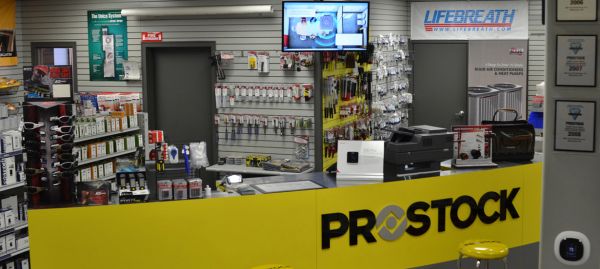
Mar-Hy Prostock HVAC parts and supplies store in Milwaukie

Support for the next service call.

Mar-Hy Distributors adopted the Prostock concept to enhance our support of local HVAC contractors. Since opening our Prostock store, we have received positive feedback from contractors on how they have improved response time to their customers. Our HVAC contractors have been able to stay ahead of the competition with access to our extensive inventory of Prostock Parts.

Quality parts. Contractor support.

Our Prostock replacement parts department is committed to improving the business of our HVAC contractors by providing quality services, competitive pricing, and products and supplies that earn customer trust and build lifetime customer satisfaction. We value our contractors and will continue to provide top of the line service for all of your HVAC needs.

Our team at Mar-Hy Distributors would like to thank you for your business.

Give HVAC Candidates a Realistic Preview Before They Accept

A clear job ad starts the conversation. A realistic preview helps a candidate understand how the role works during an ordinary week: assignments, support, travel, schedule changes, documentation, and development. Use it to improve mutual understanding before an offer becomes an unexpected first-day experience.

Choose the questions a candidate needs answered

Describe the actual role rather than the most attractive job in the company. A service technician, installation apprentice, dispatcher, and supervisor will encounter different work and support.

Include the normal range of assignments and material exceptions, such as approved on-call or travel expectations. Have the responsible managers confirm the facts so the preview does not contradict the job ad or interview.

Separate the starting role from a possible future role. Development can be explained through the actual process without implying a guaranteed promotion, schedule, or earnings outcome.

Use a representative workday discussion

Prepare an anonymized example showing how an assignment is received, what information the worker gets, where they seek help, and how the work is handed off. Include a normal complication rather than only a perfectly prepared job.

For an invented example, the candidate sees a fictional schedule with a delayed part and a customer access window. The supervisor explains who replans the appointment, what the technician is expected to report, and how the customer is updated.

The purpose is understanding, not unpaid productive work. A discussion or simulation can reveal the operating process without asking a candidate to perform customer service, handle equipment, or fill an actual staffing gap.

Explain support in concrete terms

Suggested preview topics
Topic What to explain Question to invite
Assignments Typical work, territory, and starting capability expected. Which tasks would I perform at entry?
Technical help The actual supervision and escalation route. What happens when I encounter unfamiliar equipment?
Schedule Normal hours and material travel or on-call conditions. How are changes communicated?
Records The ordinary documentation and handoff responsibilities. How is time provided to complete them?
Learning The supported development process and its conditions. How will progress be reviewed?

Keep assessment separate from preview

If the company also evaluates job-related capability, identify that assessment and its reviewed process. Do not turn an informational visit into an undisclosed test or introduce irrelevant personal questions.

The EEOC’s employment-practices guidance addresses discriminatory recruiting and selection practices. Have the appropriate employment reviewer check the company’s actual approach, including accommodations and consistency.

Ask candidates to explain their understanding of the role and raise questions. The aim is to detect a mismatch in expectations, not reward a person for agreeing with every statement the supervisor makes.

Use observation only under an approved arrangement

A workplace visit or observation may involve access, safety, privacy, insurance, compensation, and employment-law questions. Obtain the appropriate review and site permission before arranging one, and provide a suitable alternative where needed.

Do not send an unprepared candidate onto a live job or ask them to carry out productive work under the label of a preview. The Department of Labor’s hours-worked guidance illustrates that work and training time require careful treatment; it is not a blanket exemption for applicant activities.

Keep customer and employee information protected. Use fictional or appropriately anonymized examples rather than expose actual job records, private conversations, or access credentials during a recruiting visit.

Let candidates hear a consistent account

Prepare the employees who participate. They should describe their experience honestly and distinguish their own assignment from the role being offered. Do not script a glowing testimonial or ask staff to conceal a material condition.

If the candidate hears different answers about travel or technical support, resolve the discrepancy before the process moves forward. That disagreement may reveal an operational gap rather than a candidate misunderstanding.

Keep the preview proportionate to the opening. A lengthy process can consume candidate and staff time without adding useful information. Choose the few examples that explain the actual work and its important conditions.

Check understanding before and after hiring

Invite practical questions about how work is supported, and answer them without treating the question itself as a lack of commitment. A candidate asking how on-call coverage is arranged may be trying to understand the role accurately.

Use the same material facts for people applying to the same role, while providing appropriate accommodations and answering individual job-related questions. Keep private or protected information out of an informal team discussion and follow the approved employment process.

Review the example when the role changes. New territory, different equipment responsibilities, or a revised support arrangement can make last year’s preview inaccurate. Keep the owner of the preview connected with the managers who change the actual work.

A candidate who decides the role does not fit after receiving an accurate preview has still reached a useful outcome. The goal is a supported mutual decision, not maximizing acceptance by withholding material conditions.

Summarize the role, support, and material expectations through the company’s approved offer process. Record unresolved questions and answer them accurately rather than assume enthusiasm equals informed agreement.

After onboarding, ask whether the preview matched the work. Use mismatches to improve the role, interview, or preview. Do not blame a new employee for expecting an arrangement the company described but did not provide.

When product training is part of the development plan, confirm the actual class scope and prerequisites with Mar-Hy. The preview should describe support the employer can arrange, with licensing, certification, and task authorization kept distinct.

PROSTOCK AT MAR-HY

PROSTOCK PROFESSIONAL QUALITY HVAC PARTS AND SUPPLIES

Mar-Hy Prostock HVAC parts and supplies store in Milwaukie

Support for the next service call.

Mar-Hy Distributors adopted the Prostock concept to enhance our support of local HVAC contractors. Since opening our Prostock store, we have received positive feedback from contractors on how they have improved response time to their customers. Our HVAC contractors have been able to stay ahead of the competition with access to our extensive inventory of Prostock Parts.

Quality parts. Contractor support.

Our Prostock replacement parts department is committed to improving the business of our HVAC contractors by providing quality services, competitive pricing, and products and supplies that earn customer trust and build lifetime customer satisfaction. We value our contractors and will continue to provide top of the line service for all of your HVAC needs.

Our team at Mar-Hy Distributors would like to thank you for your business.

Use Employee Stories to Explain HVAC Work Accurately

An employee’s account can help a candidate understand the work behind a recruiting message. Make the story specific, voluntary, and accurate about the person’s role and circumstances. One technician’s experience should not become a promise that every employee will receive the same assignments, advancement, schedule, or earnings.

Choose a useful question for the story

Ask what a candidate needs to understand: how a service day is prepared, how a new technician receives support, what an instructor does, or how a particular career move occurred. A focused question produces more useful detail than asking someone to praise the company.

Keep the subject within the employee’s experience. A person can explain how they learned a task or whom they contact for support. They may not be able to substantiate a company-wide claim about retention, compensation, diversity, or every employee’s training access.

Do not invent a composite employee or customer account and present it as a real testimonial. If a scenario is illustrative, label it clearly as an illustration rather than give it a fictional identity that appears to be a genuine employee.

Make participation a real choice

Use an appropriate voluntary permission process for the story, images, voice, and intended channels. Explain who will see the material, how it may be edited, and whom the employee can contact with concerns. Have the relevant employment, privacy, and legal reviewers assess the actual arrangement.

A supervisor’s request can feel different from an ordinary marketing invitation. Avoid linking participation or praise to assignments, performance judgments, or advancement. Offer ways to decline without requiring a public explanation.

Collect only details needed for the story. An employee can describe learning a skill without disclosing personal finances, medical information, family circumstances, or another person’s private experience. Do not treat an enthusiastic interview as permission to publish everything said.

Keep context with the experience

Identify the person’s actual role and the relevant period. A former apprentice describing a past training arrangement should not imply that the same program, instructor time, fees, or promotion route is currently available to every applicant.

In an invented example, a technician says a supervisor helped them prepare for a specific product assignment. A useful recruiting story can explain the learning activity and support involved. Rewriting it as “Everyone becomes a specialist quickly” adds a claim the experience does not establish.

Ask which conditions made the experience possible: prerequisites, available work, supported practice, required credentials, or a particular vacancy. These details help candidates understand the path without turning it into a guaranteed outcome.

Edit for clarity without changing the meaning

Suggested employee-story review
Area Question to ask Useful evidence
Identity Is the role and relationship accurately described? The employee’s confirmed role and relevant date.
Experience Does the account remain within what the person actually experienced? The original approved account and supporting context.
Claims Has an individual example become an unsupported company-wide promise? A review of headline, edit, caption, and destination together.
Permission Does permission cover the actual material and use? The appropriate documented agreement and contact route.
Currency Are the described arrangements still accurate? A scheduled recheck and an owner for changes.

Have the employee review the final account through the agreed process. A short edit can remove an important qualification; a headline can make a more sweeping claim than the interview. Review the finished message, not only the transcript.

Make the employment relationship visible

FTC’s endorsement guidance explains that endorsements must be honest and that unexpected material connections, including employment in relevant advertising contexts, can require clear disclosure. Have appropriate reviewers determine how the actual recruiting and promotional use should identify the relationship.

Do not disguise an employee as an independent observer or use an account to support a performance claim the company could not otherwise substantiate. A personal endorsement is not proof of an equipment’s technical results or a universal career outcome.

For employment decisions and recruitment practices, EEOC’s small-business resources provide information on federal discrimination responsibilities. Use the appropriate employment review for the actual story-selection and recruiting process, without assuming one employee represents an entire group.

Keep the story useful after publication

Give candidates a clear route to current role information and supported questions. An older employee story can remain useful if it is accurately dated and does not conflict with today’s job arrangements.

Recheck the material when the role, program, employee relationship, or recruiting offer changes. Apply the agreed process for corrections or concerns. Keep authentic experience and current facts together; the purpose is an informed conversation about work, not a polished promise the company cannot support.

PROSTOCK AT MAR-HY

PROSTOCK PROFESSIONAL QUALITY HVAC PARTS AND SUPPLIES

Mar-Hy Prostock HVAC parts and supplies store in Milwaukie

Support for the next service call.

Mar-Hy Distributors adopted the Prostock concept to enhance our support of local HVAC contractors. Since opening our Prostock store, we have received positive feedback from contractors on how they have improved response time to their customers. Our HVAC contractors have been able to stay ahead of the competition with access to our extensive inventory of Prostock Parts.

Quality parts. Contractor support.

Our Prostock replacement parts department is committed to improving the business of our HVAC contractors by providing quality services, competitive pricing, and products and supplies that earn customer trust and build lifetime customer satisfaction. We value our contractors and will continue to provide top of the line service for all of your HVAC needs.

Our team at Mar-Hy Distributors would like to thank you for your business.

Make an HVAC Emergency Plan People Can Use at the Site

An emergency call changes the order of decisions. Protecting people and activating the appropriate response comes before diagnosing equipment or protecting the schedule. A useful plan tells staff what their role is, how to obtain help, and when the situation exceeds the company’s service capability.

Distinguish an urgent service request from an emergency response

A customer may call a loss of cooling an emergency because it disrupts the building. A worker may encounter a condition that requires evacuation or emergency services. Those situations can overlap, but a priority appointment is not a substitute for a site emergency procedure.

Have the responsible safety personnel define the conditions and reporting routes for the work your company accepts. Dispatchers need approved language for escalation and must not improvise technical instructions for an unknown hazard over the phone.

For example, an invented after-hours call might begin as “the unit stopped.” The caller then reports an active alarm and people feeling unwell. The office should use its established emergency escalation process rather than continue a routine troubleshooting questionnaire. The technician’s appointment status does not establish that the building is safe to occupy.

Connect the company plan to the actual site

OSHA’s emergency-preparedness guidance discusses reporting, evacuation, accountability, assigned duties, and coordination with other employers. It also explains that emergency-action-plan requirements depend on applicable standards; determine the requirements for your work rather than assume one generic form proves compliance.

Before work starts, identify the location accurately enough for a responder to find it. A postal address may be insufficient for a campus, roof, service yard, or locked mechanical area. Include the supported entry arrangement and the site contact in the information staff can obtain without searching through unrelated files.

Ask how site alarms and instructions reach contractors. Establish where workers should go, who accounts for the crew, and how the company learns that someone is unaccounted for. Include visitors and temporary staff in the applicable arrangement.

Assign roles before a crisis

Suggested planning questions for qualified review
Function Question to resolve Common gap
Reporting Who contacts the site’s response system and emergency services when required? Several people assume someone else called.
Movement How do workers receive and follow the applicable evacuation or shelter instruction? A crew knows its work area but not the site’s response plan.
Accountability Who confirms the location and status of each crew member? The office relies on a schedule that no longer reflects the site.
Special duties Who is actually trained, equipped, and assigned to perform them? An ordinary service technician is assumed to be a rescue responder.
Return to work Who can authorize re-entry and assess the remaining work? A cleared appointment is mistaken for a cleared hazard.

Keep emergency duties within capability

Do not build a plan around workers entering a hazardous area, attempting rescue, using response equipment, or shutting down a process unless the required training, equipment, procedures, and authorization are established. A technician’s familiarity with a unit does not make every emergency task appropriate.

Make those limits part of training. People under pressure may try to help without recognizing the additional danger. A clear role can be to move to the designated safe location, report information, and meet responders from a safe position.

Keep access to required emergency information available during a power or network interruption. Decide what can be stored locally, how it is protected, and how updates reach every assigned person. A plan available only through a failed login is unavailable when needed.

Practice a realistic communication failure

At a multi-employer site, resolve how the contractor’s crew list relates to the host’s accountability process. If the office records three assigned technicians but one has already left for another job, an outdated list can create a false missing-person report. Conversely, an unrecorded temporary worker may be overlooked. Agree on a practical way to keep arrival, departure, and crew changes current through the site’s required process.

Do not rely on a customer app’s last location or a vehicle’s position as proof that a person is safe. Those signals may describe a device or vehicle rather than the worker’s current condition. The plan needs an actual accountability method and an escalation route when a person cannot be confirmed.

Use a discussion exercise appropriate to the workplace before attempting any physical drill. Present a scenario such as an inaccessible normal exit or an unavailable crew leader. Ask each person to explain their action and the approved alternative.

The purpose is to find ambiguity, not reward the fastest answer. If staff disagree about who contacts the site representative, resolve that issue and update the plan. Include the relevant site and safety personnel when evaluating a drill.

After an event, preserve the facts, support required reporting, and review the process without replacing a proper investigation with speculation. Changes may be needed to staffing, communication, access, or training as well as equipment.

Reassess the job before restarting it

A return to the site does not automatically mean the original work plan remains suitable. Conditions, access, equipment status, and other trades’ activities may have changed. Have the responsible qualified people determine what can resume and which checks or controls are needed.

Keep the customer informed about the service status without suggesting that an HVAC business can certify every building hazard resolved. For equipment or parts support after the site is appropriately released, provide Mar-Hy the exact model information and the confirmed work requirement.

PROSTOCK AT MAR-HY

PROSTOCK PROFESSIONAL QUALITY HVAC PARTS AND SUPPLIES

Mar-Hy Prostock HVAC parts and supplies store in Milwaukie

Support for the next service call.

Mar-Hy Distributors adopted the Prostock concept to enhance our support of local HVAC contractors. Since opening our Prostock store, we have received positive feedback from contractors on how they have improved response time to their customers. Our HVAC contractors have been able to stay ahead of the competition with access to our extensive inventory of Prostock Parts.

Quality parts. Contractor support.

Our Prostock replacement parts department is committed to improving the business of our HVAC contractors by providing quality services, competitive pricing, and products and supplies that earn customer trust and build lifetime customer satisfaction. We value our contractors and will continue to provide top of the line service for all of your HVAC needs.

Our team at Mar-Hy Distributors would like to thank you for your business.

Make an HVAC Application Process Candidates Can Finish

A candidate can be interested in a job and still be unable to complete a confusing phone form, upload the requested file, or find out whether the application arrived. Review the application journey as an actual user task. Clear steps and reliable feedback help the company receive usable information without making the process unnecessarily difficult.

Show the steps before asking for information

Explain what the initial application requires, which information is optional, and what happens after submission. Distinguish the application from later interviews, document checks, assessments, or other reviewed hiring steps.

Do not ask candidates to complete an extensive process without telling them which stage they are in. If a resume is optional, say so. If a file is required, identify the supported formats and limits before the person reaches the upload field.

Use the actual hiring team’s capacity to set response expectations. A generic promise of an immediate reply is unhelpful if the office reviews applications only at planned times.

Require only information appropriate to the stage

Have the hiring and appropriate legal or HR reviewers decide which information is necessary and suitable for the initial application. A field should have a defined purpose rather than exist because the template included it.

Separate required information from material that can be collected later. Avoid making the candidate repeatedly enter the same details in different formats when the team does not use the duplication.

EEOC’s small-business resources address responsibilities under federal employment discrimination laws. Review the actual questions, application methods, accommodation process, and relevant state or local requirements with qualified support.

Make the form understandable and accessible

W3C’s form-instruction guidance recommends explaining required and optional input, formats, and other relevant instructions. Give fields persistent labels rather than relying only on disappearing placeholder text.

Group related questions and use plain terms. A candidate should not need to guess whether a field asks for a credential name, license number, expiration date, or a general description of experience.

Test keyboard navigation, assistive-technology use, visible focus, and smaller screens with appropriate expertise. A form that looks attractive on the hiring manager’s desktop may behave differently on a phone or with another input method.

Preserve work when something goes wrong

A single invalid field should not require the candidate to retype the whole application. Explain the error near the relevant control and provide clear directions for correction.

In a hypothetical test, the candidate uploads a file that exceeds the limit. A useful response identifies the limit and supported alternatives while preserving the completed contact and experience fields. “Something went wrong” gives no path forward.

Review connection interruptions and session timeouts. If the system supports saving progress, demonstrate that it works and explain how to return. If it does not, avoid implying that partially entered information has been safely retained.

Confirm actual submission

Suggested application-journey test
Test Candidate should understand Hiring team should verify
Normal submission The application was received and the next stage. The correct record and attachments reached the review queue.
Missing required input Which item needs correction and why. Valid entered information remains available.
Unsupported upload Supported format, size, and alternative contact route. The failure does not appear as a complete application.
Phone use The same steps and feedback as other users. Controls, labels, and file handling remain usable.
Assistance request How to reach the appropriate person. The request is routed and answered through the supported process.

Keep status messages consistent with reality

A success screen should mean the application was received by the intended system, not merely that a button was pressed. Check the complete path from the form through any integration to the hiring queue.

If an acknowledgment is sent, make its purpose clear. “Received” does not mean selected for interview, and a scheduled interview does not mean a job offer. Use wording that matches the actual stage.

Give the candidate a supported contact route for a missing acknowledgment or an accessibility problem. Avoid sending the person back to the same failing form as the only way to ask for help.

Protect candidate information

Establish appropriate access, retention, security, and disposal arrangements with the responsible reviewers. Do not circulate applications through broad message groups or store sensitive information in an unrelated job system merely because it is convenient.

Keep the hiring purpose separate from promotional uses. Applying for employment should not silently enroll someone in unrelated customer marketing.

Measure friction without guessing at motivation

Review where users encounter errors or abandon the process, using appropriate privacy controls. A drop at the upload step may indicate a technical barrier rather than a lack of interest in HVAC work.

Observe a few representative test users completing the journey with invented information. Fix the concrete failure, then repeat the affected task. The useful outcome is a complete, correctly routed application and a candidate who understands what happens next.

PROSTOCK AT MAR-HY

PROSTOCK PROFESSIONAL QUALITY HVAC PARTS AND SUPPLIES

Mar-Hy Prostock HVAC parts and supplies store in Milwaukie

Support for the next service call.

Mar-Hy Distributors adopted the Prostock concept to enhance our support of local HVAC contractors. Since opening our Prostock store, we have received positive feedback from contractors on how they have improved response time to their customers. Our HVAC contractors have been able to stay ahead of the competition with access to our extensive inventory of Prostock Parts.

Quality parts. Contractor support.

Our Prostock replacement parts department is committed to improving the business of our HVAC contractors by providing quality services, competitive pricing, and products and supplies that earn customer trust and build lifetime customer satisfaction. We value our contractors and will continue to provide top of the line service for all of your HVAC needs.

Our team at Mar-Hy Distributors would like to thank you for your business.

Write an HVAC Job Record the Next Technician Can Use

“Checked system, replaced part, working” leaves the next technician with unanswered questions. What was the original complaint? What evidence supported the replacement? Under what conditions was operation checked? A useful service record preserves the reasoning and the result, not just the chargeable item.

Separate the complaint from the findings

Record the customer’s description as a reported condition: which area, what behavior, when it occurs, and whether it is intermittent. Then distinguish what the technician actually observed. If the reported issue could not be reproduced, say so and describe the conditions during the visit.

This avoids turning “customer reports noise overnight” into “unit noisy” without an observation. It also helps the office decide what follow-up information would be useful rather than assuming the first visit resolved every aspect of the complaint.

Identify the equipment and the served area. Use the exact model and serial information required by the company’s process. Where multiple systems are present, give each a consistent identifier so photos, readings, parts, and recommendations stay associated with the correct unit.

Record measurements with their context

A number without a unit, measurement location, or operating condition can be difficult to interpret later. Use the applicable equipment procedure and record the information needed to understand the result: what was measured, where, how, relevant conditions, and the specification or reference used.

Document a measurement that could not be obtained rather than filling the field with a guess. Explain why it was unavailable and the planned follow-up. “Not applicable,” “not measured,” and “within the stated specification” are different statements.

Installation and commissioning records should follow the selected equipment’s requirements and the applicable quality process. ACCA’s quality standards provide references for installation and verification practices. A generic company form should be checked against the actual equipment and work.

Make the diagnostic reasoning visible

A suggested structure for a service narrative
Field Include Common omission
Reported issue Customer’s description, affected area, timing, and relevant history. A vague “not working” entry.
Observed condition What the technician found and whether the complaint was reproduced. Presenting a report as an observed fact.
Evidence and reasoning Relevant measurements, document references, and the basis for the decision. A replacement with no recorded basis.
Action Authorized work, exact relevant part identity, and any change from the planned scope. An unexplained “adjusted” or “fixed.”
Verification and next step What was checked, the result, limitations, unresolved items, and follow-up owner. “All good” without the supporting check.

Use a sample narrative to coach the standard

Here is an illustrative documentation example, not a diagnosis or service procedure: “Customer reports intermittent loss of heating in the upstairs zone during the evening. The reported condition did not occur during this visit. Equipment identity and control configuration were recorded. Reviewed the available event history using the applicable manufacturer information; findings are attached to this work order. No unsupported part replacement was made. Explained the current findings and limitations to the customer. Office to arrange the approved follow-up and collect the requested operating observations.”

The example is useful because it states what is known, what remains unknown, and who owns the next step. It does not pretend the condition was reproduced or promise that an unverified repair solved it.

For a completed repair, the record should instead identify the evidence supporting the action and the verification performed afterwards. Keep the technical content equipment-specific and within the technician’s authorized scope.

Organize photos and attachments around the record

Label each attachment with the system identifier and a short description. An equipment label, a condition before work, and a completed installation can serve different purposes. Link the image to the relevant note so a reviewer knows why it was retained.

Collect only material the company is authorized to retain, and avoid unnecessary customer information or unrelated areas of the property. Use the company’s approved storage and access controls. A personal phone album or private cloud account should not become the only location of business records.

For corrections, preserve a traceable history through the normal system. Explain a material change rather than quietly replacing an entry after a question or dispute arises.

Close out the handoff, including unresolved work

Record what was explained to the customer, which documents were supplied, and any maintenance or operating information covered using the applicable manufacturer material. Separate completed work from recommendations and from work requiring another authorization.

Every unresolved item needs a responsible person and a next action. If the office must confirm a part, schedule a return visit, obtain technical support, or issue a revised proposal, state that clearly. The next employee should not have to infer an assignment from a long narrative.

Review a small sample consistently

Have a field lead and office reviewer use the same criteria on a manageable set of records. Check equipment identity, separation of reported and observed conditions, useful evidence, authorized action, verification, and follow-up. Track omissions by type rather than giving every technician a vague “documentation score.”

Use recurring gaps to improve the form, training, or workflow. If a required field never applies to a particular equipment type, fix the template or exception process. If technicians lack time or access to attach records, address that obstacle.

A complete parts inquiry starts with a complete equipment record. When contacting Mar-Hy, include the equipment identity, original part information, quantities, and the specific question still open.

PROSTOCK AT MAR-HY

PROSTOCK PROFESSIONAL QUALITY HVAC PARTS AND SUPPLIES

Mar-Hy Prostock HVAC parts and supplies store in Milwaukie

Support for the next service call.

Mar-Hy Distributors adopted the Prostock concept to enhance our support of local HVAC contractors. Since opening our Prostock store, we have received positive feedback from contractors on how they have improved response time to their customers. Our HVAC contractors have been able to stay ahead of the competition with access to our extensive inventory of Prostock Parts.

Quality parts. Contractor support.

Our Prostock replacement parts department is committed to improving the business of our HVAC contractors by providing quality services, competitive pricing, and products and supplies that earn customer trust and build lifetime customer satisfaction. We value our contractors and will continue to provide top of the line service for all of your HVAC needs.

Our team at Mar-Hy Distributors would like to thank you for your business.

Compare HVAC Sound Data Without Confusing the Measurements

A lower published decibel number does not automatically mean a quieter finished room. First establish what was measured, under which operating condition, and where the sound matters. Then review the equipment, transmission path, and receiving space together.

Sound power and sound pressure answer different questions

Trane’s acoustics primer distinguishes sound power, which characterizes acoustic energy emitted by a source, from sound pressure, which is affected by the source, distance, and surroundings. Both can be reported in decibels, so the unit alone does not make the numbers comparable.

Imagine two invented brochure entries: one lists a sound-power level of 52 dB, while another lists a sound-pressure level of 42 dB at a stated distance. You cannot conclude from those two numbers alone that the second product is ten decibels quieter in the intended room.

Ask for comparable data and the applicable measurement or rating conditions. Keep operating speed, mode, and configuration visible rather than assume a minimum-speed marketing value describes all operation.

Define where quietness is needed

Record the receiving location and activity: a bedroom, conference room, outdoor seating area, or neighboring property can raise different questions. Include when the sound matters and which system modes coincide with that use.

For a complaint, ask what the occupant hears and when. A steady rush, intermittent rattle, low hum, and startup event are different descriptions to investigate. Record the observation without treating it as a confirmed component diagnosis.

Identify other sources present during the observation. The room sound may include non-HVAC equipment and activity, so a total room reading does not automatically belong to one HVAC unit.

Keep the sound character in the review

A single weighted number may not describe the frequency character that matters to the occupant. Trane’s primer discusses frequency bands and different descriptors, including A-weighted levels, noise criteria, and room criteria.

Have the responsible acoustical designer establish the appropriate project criteria and analysis. Do not treat an NC or RC target as an interchangeable outdoor-unit dBA rating, or invent a universal acceptable value for every room.

For a sensitive application, obtain the sound data the designer requests before selection. A general “quiet operation” phrase may not contain enough information to evaluate the proposed installation.

Investigate the source, path, and receiver

Suggested sound-review questions
Part of the question Information to collect Avoid this assumption
Source Exact equipment, operating state, and applicable published sound data. The lowest advertised value covers every mode.
Path Location, connected construction, ducts or openings, and the suspected transmission route. Changing the unit alone resolves every installation-related path.
Receiver Affected space, listening position, use, time, and other sound sources. One room reading establishes a product rating.
Verification The agreed operating condition, measurement method, and acceptance basis. A different condition before and after proves the improvement.

Resolve the cause before adding a treatment

Qualified personnel should determine whether the issue concerns equipment condition, airflow, installation, transmission, or the selected application. Keep the investigation within applicable service instructions and safety arrangements.

Review proposed acoustic treatments with the designer and equipment requirements. A barrier, enclosure, duct change, or isolation arrangement can affect access, clearances, airflow, structure, or other project conditions. An improvised treatment can create another problem.

Describe the intended result and how it will be checked before committing to the change. If the evidence is incomplete, identify the missing information rather than promise a particular reduction.

Make the equipment inquiry comparable

Send Mar-Hy the exact proposed models, application, sound-data type, operating condition, and any project criteria. Ask for the relevant manufacturer information rather than a general ranking of quiet brands.

Retain the reviewed data and installation basis with the job. The most useful comparison connects the source rating with the actual receiving location and an agreed verification method.

PROSTOCK AT MAR-HY

PROSTOCK PROFESSIONAL QUALITY HVAC PARTS AND SUPPLIES

Mar-Hy Prostock HVAC parts and supplies store in Milwaukie

Support for the next service call.

Mar-Hy Distributors adopted the Prostock concept to enhance our support of local HVAC contractors. Since opening our Prostock store, we have received positive feedback from contractors on how they have improved response time to their customers. Our HVAC contractors have been able to stay ahead of the competition with access to our extensive inventory of Prostock Parts.

Quality parts. Contractor support.

Our Prostock replacement parts department is committed to improving the business of our HVAC contractors by providing quality services, competitive pricing, and products and supplies that earn customer trust and build lifetime customer satisfaction. We value our contractors and will continue to provide top of the line service for all of your HVAC needs.

Our team at Mar-Hy Distributors would like to thank you for your business.

Prepare an HVAC Remote Inspection Around What the Inspector Must See

A video connection does not make every inspection suitable for remote completion. Confirm the authority’s process, required evidence, safe on-site support, and result record before scheduling. The goal is to let the responsible inspector assess the required work, not merely complete a call.

Identify the kind of inspection

A jurisdictional permit inspection, contractor quality review, manufacturer support call, and customer walkthrough serve different purposes. Establish which one is being arranged and who has authority to accept its result.

The International Code Council’s RVI overview describes coordination with the authority having jurisdiction, site preparation and identification, communication of results, and retained records. Use the actual authority’s current process for the job.

Do not tell a customer that a contractor’s virtual walkthrough is an official permit approval unless the relevant authority has actually provided that approval.

Likewise, a connected thermostat or remote diagnostic screen does not automatically supply all the evidence an inspector needs. Establish the requirements for the actual inspection rather than build the process around a convenient device.

Confirm eligibility and required evidence

Ask whether the inspection type and project stage are eligible for remote review. Confirm the documents, views, measurements, identification, and other information the responsible inspector requires.

A published remote-inspection method or standard does not by itself establish local adoption or acceptance. Verify the process and any project-specific conditions before relying on it in the schedule.

Plan for an on-site alternative if required evidence cannot be obtained remotely. Do not assume that the video method guarantees a shorter wait or that every inspection can be completed in one session.

Assign a suitable on-site presenter

Identify who will operate the device, communicate with the inspector, and provide the permitted views. That person needs appropriate access, preparation, and qualifications for any activity they are asked to perform.

A remote inspector’s location does not remove hazards for the person at the site. Do not send an unprepared customer or worker into an unsafe area, ask them to remove protective panels, or improvise a test to improve the camera view.

Use applicable safety procedures and qualified personnel for the work. If the requested evidence cannot be obtained safely under the arrangement, stop and resolve the limitation through the proper process.

For shared or occupied properties, obtain appropriate access and privacy permissions. The camera should show the required work without unnecessarily exposing people, private documents, or unrelated spaces.

Prepare the evidence path

Suggested remote-inspection preparation
Item What to confirm Why it matters
Job identity Correct site, permit or reference, equipment, and inspection stage. Connects evidence with the intended work.
Views and documents The actual authority’s requested evidence. Avoids a connected call that cannot answer the inspection question.
On-site support Safe access, authorized person, and required qualifications. Protects the presenter and the work.
Technology Supported platform, usable signal, power, lighting, and permitted recording. Makes evidence visible and communication workable.
Result Where the official disposition and required follow-up are recorded. A completed call is not necessarily an accepted inspection.

Use an incomplete-view example

In an invented session, the presenter can show the equipment identity but cannot safely obtain another required view. The correct record identifies the evidence obtained and the unresolved requirement.

The inspector or responsible authority determines the disposition and next step under its process. The contractor should not fill the gap with a different photograph, an unsupported statement, or an assumption that silence means acceptance.

If a connection fails, preserve the actual status and arrange the supported continuation. Do not report a passed inspection merely because most of the call occurred successfully.

Keep recording and retention within the actual rules

Confirm whether recording is required, allowed, or restricted and who controls the record. Use the authority’s process and applicable privacy and retention requirements.

Keep necessary equipment documents and the final result accessible to the authorized project team. A screenshot of a friendly conversation is not a substitute for the official disposition where one is required.

When corrections are required, identify the affected work, responsible person, and reinspection or verification needed. Preserve the earlier finding rather than replace it with an unexplained clean record.

Connect the result to the project plan

Test the permitted technology path before the appointment without treating the rehearsal as an inspection. Confirm that the presenter can communicate, identify the work, and obtain the approved views under safe conditions.

Check whether documents need to be submitted in advance or through a specific system. A file visible on the presenter’s phone may not be available to the inspector or retained in the required project record.

Have a supported contact route for a technical interruption and establish who may reschedule. Keep the project’s status accurate while the session is incomplete instead of closing it to make the schedule look finished.

Review recurring failed sessions for a preparation issue. Poor lighting, incomplete identification, or missing documents may be preventable; an inspection unsuitable for remote completion needs a different arrangement rather than repeated attempts with the same limitation.

Update the actual next activity only when its prerequisites are satisfied. A remote inspection can be efficient while still finding work that needs correction or another review.

Explain the status accurately to the customer and other trades. Separate appointment completion, evidence review, approval, and permission for subsequent work according to the actual project process.

For missing manufacturer information, provide Mar-Hy the exact equipment and question. Keep inspection acceptance with the responsible authority and qualified reviewers rather than infer it from a product feature.

PROSTOCK AT MAR-HY

PROSTOCK PROFESSIONAL QUALITY HVAC PARTS AND SUPPLIES

Mar-Hy Prostock HVAC parts and supplies store in Milwaukie

Support for the next service call.

Mar-Hy Distributors adopted the Prostock concept to enhance our support of local HVAC contractors. Since opening our Prostock store, we have received positive feedback from contractors on how they have improved response time to their customers. Our HVAC contractors have been able to stay ahead of the competition with access to our extensive inventory of Prostock Parts.

Quality parts. Contractor support.

Our Prostock replacement parts department is committed to improving the business of our HVAC contractors by providing quality services, competitive pricing, and products and supplies that earn customer trust and build lifetime customer satisfaction. We value our contractors and will continue to provide top of the line service for all of your HVAC needs.

Our team at Mar-Hy Distributors would like to thank you for your business.

Build a Commercial HVAC Teaming Proposal With Clear Responsibilities

Working with another company can bring complementary capabilities to a commercial project. It also creates interfaces that need to be managed: scope, design, pricing inputs, customer communication, scheduling, acceptance, and payment. Define those relationships before presenting a combined promise to the customer.

Identify the capability the project needs

Start with the proposed work. Does it require a specialist trade, design support, a controls capability, additional qualified capacity, or a service arrangement the company cannot currently provide? A partner should address a defined need rather than serve as a vague growth strategy.

Check actual experience, qualifications, availability, and the proposed role. A company that performs well on one type of assignment may not be suitable for a different application or project scale. Ask for relevant evidence without treating a logo or an introduction as proof of capability.

Discuss the work the team will decline as well as the work it can support. A combined proposal should not imply that every project requirement is covered simply because several businesses appear on the cover.

Choose the arrangement with qualified advice

A referral, subcontract, joint proposal, and joint venture can have different commercial and legal consequences. Have the responsible legal, insurance, licensing, and financial reviewers establish the appropriate structure for the actual project.

For federal small-business opportunities, SBA describes specific joint-venture requirements. Those program rules should not be treated as a general template for every private commercial collaboration. Check the current solicitation and applicable program requirements if that is the work being pursued.

Decide who can bind each company, submit the proposal, authorize changes, and communicate commitments to the customer. A project manager’s operational role does not automatically establish authority to change a contract.

Reconcile scope at the interfaces

Consider an invented project where one company supplies HVAC equipment work and another supplies controls integration. The HVAC scope includes supported equipment operation, while the controls scope assumes the HVAC company will provide every required interface accessory.

If neither proposal names those accessories and their configuration, the combined price can conceal a gap. Resolve the interface from applicable documentation and project requirements, then identify who supplies, installs, configures, verifies, and documents each part.

Use the same approach for electrical work, structural support, access, lifting, roof work, testing, and customer instruction where relevant. Listing both company names beside an activity is weaker than identifying the lead responsibility and the required handoff.

Build a shared project assumptions sheet

Suggested teaming-proposal assumptions
Area Agreement to establish Failure it can prevent
Scope Included work, exclusions, interfaces, and acceptance evidence. Both parties assuming the other covers an item.
Schedule Dependencies, readiness information, and authorized changes. A crew arriving before prerequisite work is complete.
Commercial basis Current inputs, validity, payment structure, and change process. An old estimate becoming an unsupported fixed commitment.
Customer contact Who provides which update and who accepts decisions. Conflicting promises from different team members.
Aftercare Service routing, records, unresolved items, and applicable obligations. A customer being passed between companies after handoff.

Reconcile the combined economics

Consider an invented proposal with $60,000 revenue and $50,000 of included expected cost. Its modeled contribution before excluded expenses is $10,000. If an unassigned interface later adds $8,000 of cost without an authorized price change, only $2,000 remains on that basis.

The example is not a recommended margin or a prediction. It shows how an apparently small gap between company scopes can consume much of the result. Resolve included work before debating how the team should share the expected proceeds.

Also map when each company must pay and when it expects to receive money. A combined project can appear profitable while one participant must fund materials or labor substantially earlier than the related collection. Have the financial and legal reviewers establish the actual payment arrangements, risk allocation, and remedies.

Do not assume that the customer’s payment terms automatically flow through unchanged to every team member. Confirm each agreement, including the treatment of changes, delays, disputed work, and final acceptance.

Keep competition boundaries clear

Legitimate collaboration on a defined project is not permission to coordinate unrelated competitive behavior. DOJ identifies price fixing, bid rigging, and market allocation among competitors as criminal antitrust violations.

Have qualified counsel review arrangements involving competitors and establish appropriate information-sharing boundaries. Do not use a networking or teaming discussion to agree on unrelated prices, customers, wages, or markets.

Share only information appropriate to the reviewed project and role. An operational need to coordinate one scope does not require exchanging every company’s complete commercial information.

Test the working relationship before a larger commitment

Where practical, begin with a supported assignment whose responsibilities and acceptance criteria are clear. Review communication, readiness, technical interfaces, quality, and completion of agreed records.

Discuss exceptions openly. A missed handoff can reveal an ambiguous scope rather than a lack of effort. Correct the agreement and operating method before repeating the same ambiguity on a larger project.

For the equipment and material portion, give Mar-Hy one reconciled inquiry with exact combinations, accessories, quantities, and timing. Confirm the current quote and supply assumptions before incorporating them into the combined customer proposal.

PROSTOCK AT MAR-HY

PROSTOCK PROFESSIONAL QUALITY HVAC PARTS AND SUPPLIES

Mar-Hy Prostock HVAC parts and supplies store in Milwaukie

Support for the next service call.

Mar-Hy Distributors adopted the Prostock concept to enhance our support of local HVAC contractors. Since opening our Prostock store, we have received positive feedback from contractors on how they have improved response time to their customers. Our HVAC contractors have been able to stay ahead of the competition with access to our extensive inventory of Prostock Parts.

Quality parts. Contractor support.

Our Prostock replacement parts department is committed to improving the business of our HVAC contractors by providing quality services, competitive pricing, and products and supplies that earn customer trust and build lifetime customer satisfaction. We value our contractors and will continue to provide top of the line service for all of your HVAC needs.

Our team at Mar-Hy Distributors would like to thank you for your business.

Plan HVAC Retirement Around the Systems That Must Keep Working

Removing an HVAC unit can affect electrical supplies, controls, piping, drainage, ventilation, and other equipment that remains in service. Define those interfaces before anyone begins retirement work. The removal plan should show both what will disappear and which functions must continue.

Define the asset and the retirement boundary

Identify the exact equipment, associated components, served areas, ownership, and intended final state. “Remove the old system” can mean removing one outdoor unit, a complete matched system, abandoned distribution components, or a much larger connected assembly.

Walk the scope with the responsible building and trade representatives. Compare drawings, labels, and actual conditions. Old drawings can be useful starting information, but a connection that is absent from the drawing may still serve another part of the building.

List retained components separately from removed components. A replacement proposal should not quietly assume that existing piping, wiring, controls, or supports are suitable for reuse. Reuse needs its own application and condition review.

Map shared functions and stored energy

OSHA’s hazardous-energy overview identifies electrical, mechanical, hydraulic, pneumatic, chemical, thermal, and other energy sources. Unexpected startup or stored-energy release can create serious hazards during service and maintenance.

Have appropriately qualified people identify the applicable energy-control requirements and site-specific procedures. A thermostat command or an app showing “off” is not proof that equipment is isolated. This planning guide does not supply an isolation procedure or authorize disconnection work.

Also review shared services. A control network may connect equipment that remains. A common pipe or circuit may serve another function. The retirement boundary must be established from reliable identification and appropriate verification, not from the assumption that every visible connection belongs only to the unit being removed.

Describe the operating transition

Plan the interval between old-system shutdown and accepted replacement service. Identify the areas and activities affected, the people who authorize the interruption, and any approved temporary arrangements.

A hypothetical building may have two separately identified systems serving different occupied areas. If one remains operating during replacement of the other, the plan must establish how retained services and access are protected. Two units on a roof are not proof that one provides adequate backup for the other’s load.

Do not describe temporary conditioning as equivalent service without an application assessment. The intended function, capacity, electrical arrangements, placement, moisture handling, supervision, and operating limits need review.

Use clear release points

Suggested retirement-planning release points
Decision What must be understood Responsible coordination
Scope accepted Removed and retained equipment, connections, and final condition. Owner, contractor, and relevant designers or trades.
Interruption authorized Affected functions, timing, occupants, and contingency. Building operations and the responsible project lead.
Removal ready Applicable isolation, material handling, access, lifting, and environmental arrangements. Qualified task leaders under reviewed procedures.
Retained work accepted Condition of remaining services and any unresolved limitation. Responsible trades and building representative.

These are suggested coordination decisions, not a regulatory checklist. Name the actual authority for each decision. A signature by someone without the relevant responsibility does not resolve the technical or operational question.

Work through a shared-control example

Imagine a hypothetical replacement where an old rooftop unit communicates with a building controller. The removal scope initially says only “disconnect and remove unit.” The building representative then explains that the same interface also supplies status information used by another operating process.

The correct planning response is to identify the actual relationship and have the responsible controls and building personnel define the transition. It is not to assume that an unused-looking cable can be cut, nor to leave an obsolete command in place because removing it was omitted from the quote.

The revised scope should explain what happens to the old asset’s commands, alarms, schedules, labels, and historical information, and how retained functions will be checked. It should also identify who can authorize any interruption. This example does not supply a wiring or controls procedure; it shows why physical removal and functional retirement are different parts of the project.

A similar review can be needed at other interfaces, including shared distribution, structural supports, roof penetrations, or drainage. Each belongs with the appropriately qualified trade or designer and the site’s responsible representative.

Keep refrigerant and waste arrangements specific

Determine the refrigerant program, covered equipment, activity, and required handling and records for the actual job. EPA’s safe-disposal guidance distinguishes equipment normally dismantled on site from certain appliances that enter disposal streams intact.

A universal charge-size threshold copied from an old article cannot define all leak-repair, recovery, and disposal duties. Have the responsible environmental or refrigerant specialist check the current rules and the equipment category.

Confirm each receiving party’s acceptance conditions and documentation before removal. Keep refrigerant handling, other components, and metal recycling as separately understood streams. A scrap collection arrangement does not establish that all remaining obligations are complete.

Leave an intelligible final condition

Coordinate the disposition of abandoned openings, supports, controls, labels, and service records with the relevant trades. Identify which assets are retired and which remain active so a later technician does not mistake abandoned information for a current instruction.

Retain the approved final scope, relevant records, unresolved items, and next responsibilities. For replacement equipment information, give Mar-Hy the exact new-system requirements; establish the retirement and retained-service plan with the people responsible for the site.

PROSTOCK AT MAR-HY

PROSTOCK PROFESSIONAL QUALITY HVAC PARTS AND SUPPLIES

Mar-Hy Prostock HVAC parts and supplies store in Milwaukie

Support for the next service call.

Mar-Hy Distributors adopted the Prostock concept to enhance our support of local HVAC contractors. Since opening our Prostock store, we have received positive feedback from contractors on how they have improved response time to their customers. Our HVAC contractors have been able to stay ahead of the competition with access to our extensive inventory of Prostock Parts.

Quality parts. Contractor support.

Our Prostock replacement parts department is committed to improving the business of our HVAC contractors by providing quality services, competitive pricing, and products and supplies that earn customer trust and build lifetime customer satisfaction. We value our contractors and will continue to provide top of the line service for all of your HVAC needs.

Our team at Mar-Hy Distributors would like to thank you for your business.